
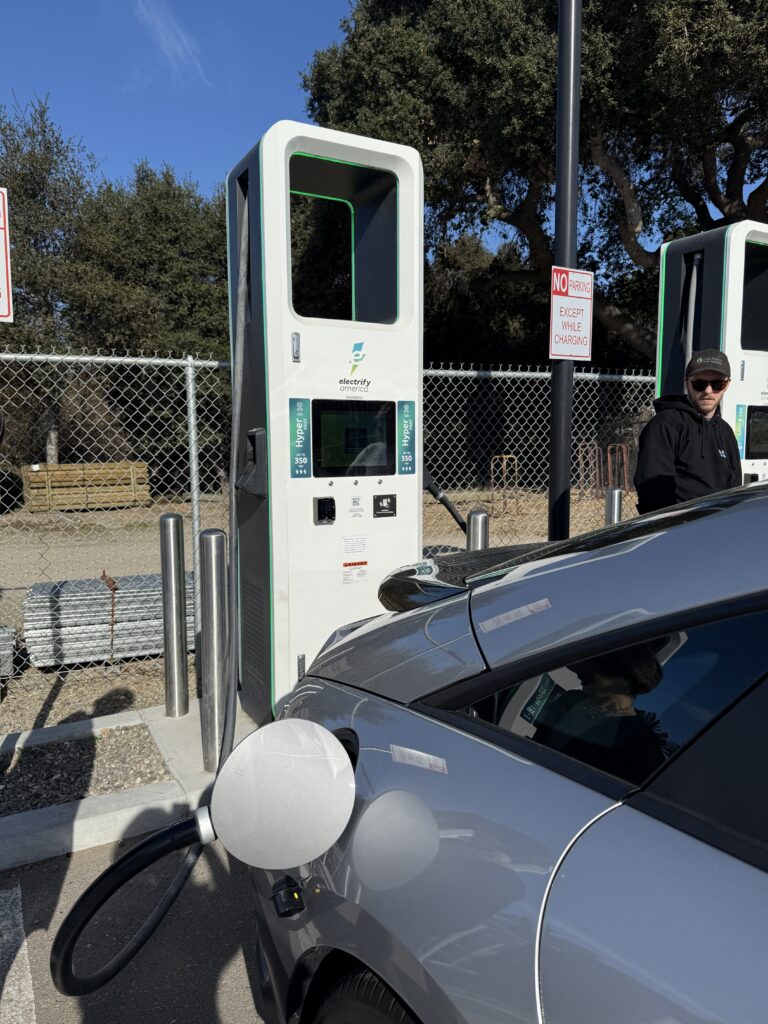
As we adjust to the 2025 code cycle, the 2025 CALGreen Code introduces important changes and clarifications to EV charging requirements. In January, we sorted through the multifamily updates. Now, we’ll take a closer look at nonresidential EV charging, including expanded requirements for new construction, parking lot alterations, and readiness for future EV truck charging.
Types of EV Charging
First, there are important distinctions in the CALGreen EV charging vocabulary:
- EV Capable includes empty conduit and space designated at the electrical panel to accommodate future EV charging (208/240-volt, 40-amp circuit). No electrical wiring is included.
- EV Charging Station (EVCS) is a stand-alone charging station.
- Level 2 is the standard type of charging station referenced in the code (208/240-volt, 40-amp)
- Low-power Level 2 charging stations operate at a lower amperage and take longer to charge. These can count as one-half of a charging station in the parking count (208/240-volt, 20-amp)
- Level 3 & DCFC (direct current fast charger) can count as five Level 2 charging stations in the parking count (480-volt, 80-amp)
These alternate charger types give project teams flexibility in the charger types and number of spaces installed. However, when EV charging stations are required, at least one standard Level 2 charger must be installed.
New Construction Triggers
In new construction, EV chargers are triggered based on the number of parking spaces, per Table 5.106.5.3.1. One important change to the table is the added column for office and retail occupancies, which increases the number of required EVCS. Also, pay attention to Note 2 under the table, pointing out that each EVCS reduces the number of required EV capable spaces.
| TABLE 5.106.5.3.1 - EV CAPABLE SPACES AND EVCS | |||
| TOTAL NUMBER OF ACTUAL PARKING SPACES | NUMBER OF REQUIRED EV CAPABLE SPACES | OTHER THAN OFFICE AND RETAIL NUMBER OF REQUIRED EVCS2, 3 | OFFICE AND RETAIL NUMBER OF REQUIRED EVCS 2, 3 |
| 1-9 | 0 | 0 | 0 |
| 10-25 | 4 | 2 | 3 |
| 26-50 | 8 | 4 | 6 |
| 51-75 | 13 | 6 | 8 |
| 76-100 | 17 | 8 | 13 |
| 101-150 | 25 | 12 | 19 |
| 151-200 | 35 | 18 | 26 |
| 201 and over | 20 percent of actual parking spaces1 | 50 percent of EV capable spaces1 | 75 percent of EV capable spaces1 |
| 1. Calculation for spaces shall be rounded up to the nearest whole number. 2. Each EVCS shall reduce the number of required EV capable spaces by the same number. 3. At least one Level 2 EVCS shall be provided. |
|||
A few parking calculation examples:
- An office building has 40 parking spaces. Since it falls between 26 and 50, 8 EV Capable spaces and 6 EVCS spaces are required. Per note 2 on Table 5.106.5.3.1, the number of EVCS reduces the number of EV Capable spaces, so this example needs 6 EVCS and 2 EV Capable spaces, for a total of 8.
- A manufacturing facility has 250 parking spaces. Per the table, 50 EV Capable Spaces (20% of 250) and 25 EVCS spaces (50% of EV Capable Spaces) are required. That would translate to 25 EV Capable and 25 EVCS.
Medium- and Heavy-Duty EV Charging Readiness
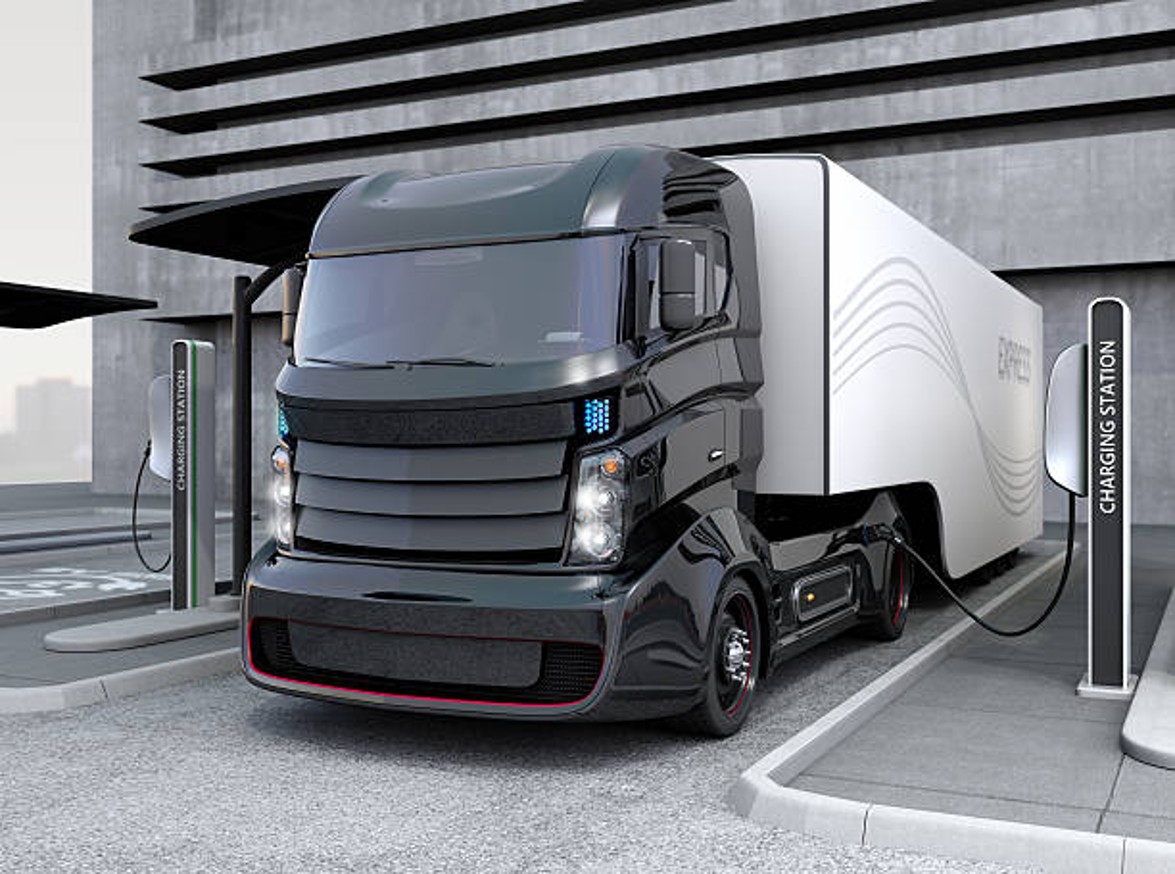
Certain occupancy types must also meet requirements for future installation of EVCS for electric trucks where off-street loading spaces are provided. Although this section did not change in the 2025 code, it was expanded during the prior intervening code cycle in July 2024 to include grocery stores, manufacturing facilities, office buildings, retail, and warehouses. Readiness requires additional capacity in raceways, transformers, and panels in accordance with Table 5.106.5.5.1.
Triggers in Parking Lot Remodels
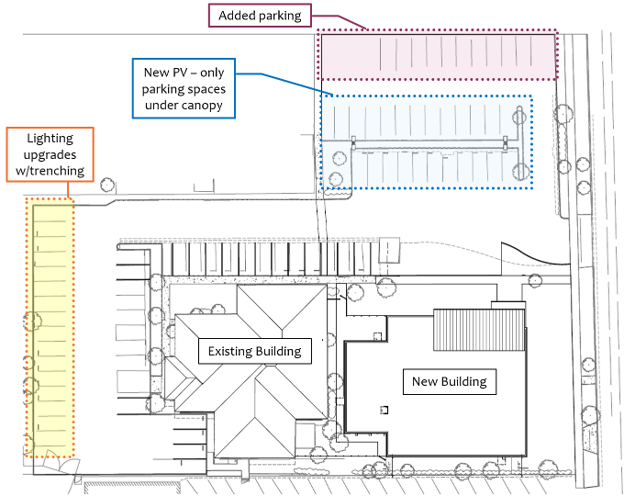
Parking lot alterations have different triggers based on both the scope of the alteration and whether previously installed EV Capable infrastructure is present. Triggers include:
- When parking area is added
- When a new photovoltaic system is installed covering existing spaces
- When electrical work is done that requires trenching
Restriping alone does not trigger the installation of EV Capable or EV charging infrastructure. The intent is not to require project teams to dig up existing parking areas, but where work is already being done, it makes sense to add the infrastructure. In the example project below, the highlighted areas would be included in the EV parking calculation, while the other areas would remain untouched.
Triggers for EV Charging
If spaces within the alteration scope already have previously installed EV Capable infrastructure, those spaces must be upgraded to include actual EV charging stations. If there is no previously installed EV Capable infrastructure, the altered spaces must comply with Table 5.106.5.3.1.
Demonstrating Compliance
To make the permitting and inspection process easier, consider the following tips:
- Include a clear table of parking requirements and calculations on the cover sheet or code analysis sheet.
- Show EV Capable spaces and/or charging equipment on both the architectural site plan (for location and mounting) and the electrical plans.
- Note that parking access compliance (e.g., van accessible) is required for charging stations but not for EV Capable spaces.
For more information about the 2025 code update and in-person trainings, please check out our events calendar at 3c-ren.org/calendar-of-events-and-trainings
Our on-demand webinars are always available at 3c-ren.org/on-demand-trainings
Don’t wait to reach out to the Code Coach Hotline for more information or to have your Energy Code or CALGreen questions answered! 3c-ren.org/energy-code-coach