
Electrification
Electrification—Why is everyone talking about it?
Electrification
Electrification—Why is everyone talking about it?
As communities combat climate change by reducing their greenhouse gas emissions, you may increasingly hear the term “electrification” referenced as a climate solution.
Electrification is the move from gas systems to modern and efficient electric appliances that are powered by clean energy. For example, swapping a gas-powered water heater for an electric-powered heat pump water heater.
Homes and businesses typically burn gas or propane for space and water heating, cooking, and clothes drying. Burning these fossil fuels will always generate greenhouse gas emissions and can contribute to indoor air pollution, outdoor air pollution, and climate change.
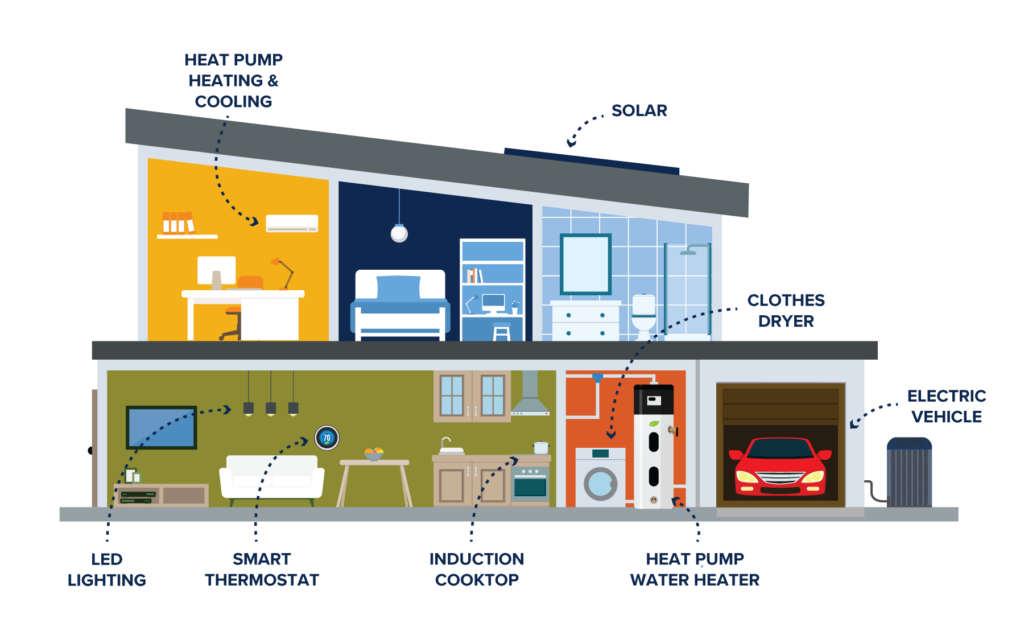
By electrifying homes and businesses and using clean, renewable electricity to power them, we can:
- Improve indoor air quality & safety
- Protect our environment
- Create an energy efficient home or business
- Reduce energy bills
Transitioning from a fossil-fuel based economy to a world powered by clean electricity is a big shift, involving everyone from residents and business owners to architects and contractors.
3C-REN’s programs are designed to support the tri-county region through this transition. 3C-REN helps build and strengthen the clean-energy workforce and provides incentives to drive the demand for electrification from consumers.
Myth Busting:
Common Misconceptions About Electrification
Will more electric appliances cause grid outages?
State agencies and utilities are working together to improve existing grid capacity to combat this. In the long run, new electrification technology will lead to more opportunities to control demand on the grid and therefore cause fewer outages.
Why don’t we just use less energy instead of electrifying more appliances that connect to the grid?
Even the most energy efficient gas appliances generate greenhouse gas emissions when they’re used. On the other hand, fully electric appliances that are powered with clean energy are carbon-free to operate. Customers in our region can already purchase clean energy from their local community choice aggregator, or by installing rooftop solar.
Will more electrification mean higher utility bills?
Several factors influence your utility bill: the cost of energy in your region, the efficiency of your appliances, and how you use energy in your home. If you own a heat pump or an electric vehicle, many utilities provide special rates, in addition to local incentives.
Will I need a panel upgrade to electrify my home?
It depends on the capacity of your electric panel and the loads you are adding. Some buildings can electrify without an upgrade, while others require an upgrade. Electrification planning, to select the most efficient equipment and consider panel optimization strategies, can help avoid unnecessary panel upgrades.
Don’t electric stoves perform worse than gas stoves?
No, in fact a 2021 Consumer Reports assessment found that induction ranges outperformed their gas counterparts most of the time at high heat, low heat, baking and broiling.
Do heat pumps really heat my home as well as my furnace?
Yes. Heat pumps are a common technology that effectively heat and cool homes. Heat pumps are well suited to the Central Coast climate, which doesn’t experience much extreme cold. However, even in the state of Maine where temperatures reach sub-zero, heat pumps are a popular choice.
What are the benefits to switching to electric?
Electrifying your home helps you live in a cleaner and healthier environment by reducing the presence of harmful chemicals, such as Volatile Organic Compounds (VOCs), and improving indoor air quality by removing gas combustion from your living space. It can also reduce the risk of gas leaks, reduce on-site emissions that affect climate change, and future proof your home for a more resilient and healthy living environment.
Aren’t electric appliances expensive to install?
You may be surprised to find it isn’t always more expensive to install an electric appliance rather than a gas-powered version. Especially with rebates and tax credits, these projects can be made more accessible. It’s recommended to do your research and receive multiple bids from contractors.
View our Programs
Learn how 3C-REN is advancing electrification on California’s central coast.
Home Energy Savings
Incentives to lower the cost of residential energy improvements for healthier and more efficient homes
read more…
Commercial Energy Savings
Incentives to lower the cost of energy improvements for small and medium business owners
read more…