
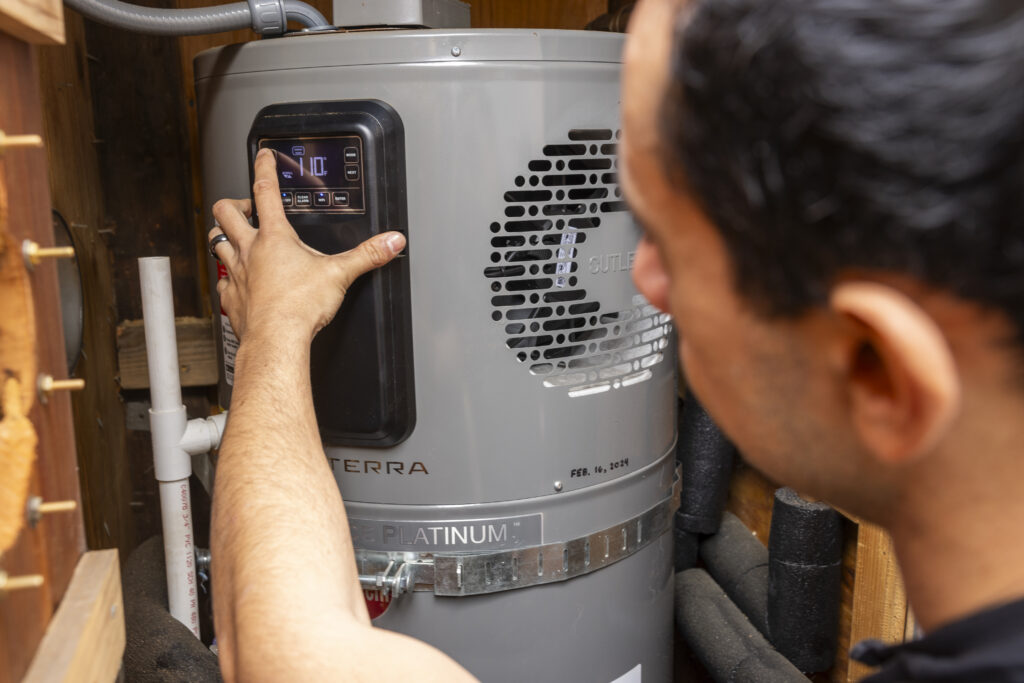
The 2025 Energy Code will continue to allow both gas and electric water heating systems; however, it now includes updated requirements designed to support a future transition to heat pump water heaters (HPWH’s). These changes are outlined in Section 110.3: Mandatory Requirements for Service Water-Heating (applicable to all occupancies) and Section 150.0(n): Single-Family Residential Buildings Mandatory Features for Water Heating Systems.
HPWH’s are the Prescriptive Baseline
In the 2022 code, some occupancies and some climate zones did not have HPWH’s as the prescriptive baseline, but in the 2025 code, HPWH’s are the prescriptive baselines throughout. Under the 2025 code, HPWHs become the prescriptive baseline across the board. This means that projects choosing to install gas or propane water heating systems must now use the performance compliance pathway and offset the associated penalty by improving other building features.
For Gas Water Heaters, Provide for HPWH Readiness
For dwellings using gas or propane water heating systems, a designated space and electrical infrastructure must be reserved for installing a Heat Pump Water Heater (HPWH) in the future. Section 150.0(n)1 describes that the space must be at least 2.5 ft × 2.5 ft × 7 ft tall, and all electrical work must comply with the California Electrical Code.
There are two compliance pathways:
A. If the designated space is within 3 ft of the gas water heater
- Provide a 125V, 20A receptacle connected to a 30A, 120/240V branch circuit within 3 ft, unobstructed.
- Label unused conductor ends as “spare” and isolate them.
- Reserve a single-pole breaker slot in the panel, labeled “Future 240V Use.”
- Install a gravity condensate drain no higher than 2 in. above the water heater base.
B. If the designated space is more than 3 ft from the gas water heater
- Provide a 240V, 30A branch circuit within 3 ft of the designated space, with a blank cover labeled “240V ready.”
- Reserve space in the service panel for a future double-pole breaker, labeled “For Future 240V Use.”
- Keep hot and cold piping exposed and accessible for future connection.
- Install a gravity condensate drain no higher than 2 in. above the water heater base.
No Electric Resistance Water Heaters, with an Exception
Electric resistance water heaters are inefficient and generally challenging to use under the performance compliance pathway. However, in the 2022 Energy Code, Section 150.2(a)1Div provides an exception for homes under 500 sq. ft. that use point-of-use distribution, allowing an on-demand electric water heater. In the 2025 code, this exception is expanded to also allow electric resistance tank water heaters under the same conditions.
Conclusion
The energy code is certainly moving toward HPWH’s in all applications, recognizing the energy efficiency of the equipment, improved indoor air quality without combustion, integration with building electrification goals and the long-term utility cost savings for the occupants. At the same time, the 2025 energy code recognizes that accommodation for other options may be needed in the transition.
For more information about the 2025 code update and in-person trainings, please check out our events calendar at 3c-ren.org/calendar-of-events-and-trainings
Our on-demand webinars are always available at 3c-ren.org/on-demand-trainings
Don’t wait to reach out to the Code Coach Hotline for more information or to have your Energy Code or CALGreen questions answered! 3c-ren.org/energy-code-coach